Epigenetic Regulation of Cell Fate in Mouse Embryonic Development

Research

How does one genome give rise to diverse cell identities?

In multicellular organisms, cell fate is decided not only by activating lineage-specific genes, but by silencing non-required fates with spatial and temporal precision — an actively maintained state rather than a passive default.

Our laboratory studies the epigenetic machinery behind that repression, using mouse embryonic and germline development as models, both windows in which DNA methylation is erased and re-established while fates are being decided. We ask how DNA methylation and repressive histone methylation keep lineage-inappropriate genes silent and how the same machinery restrains transposable elements, and how these modifications depend on one another rather than acting as independent layers.

We combine single-cell transcriptomics, blastocyst injection and genome editing to connect a lesion in the repressive machinery to a change in cell identity and to a developmental outcome
Three connected research questions

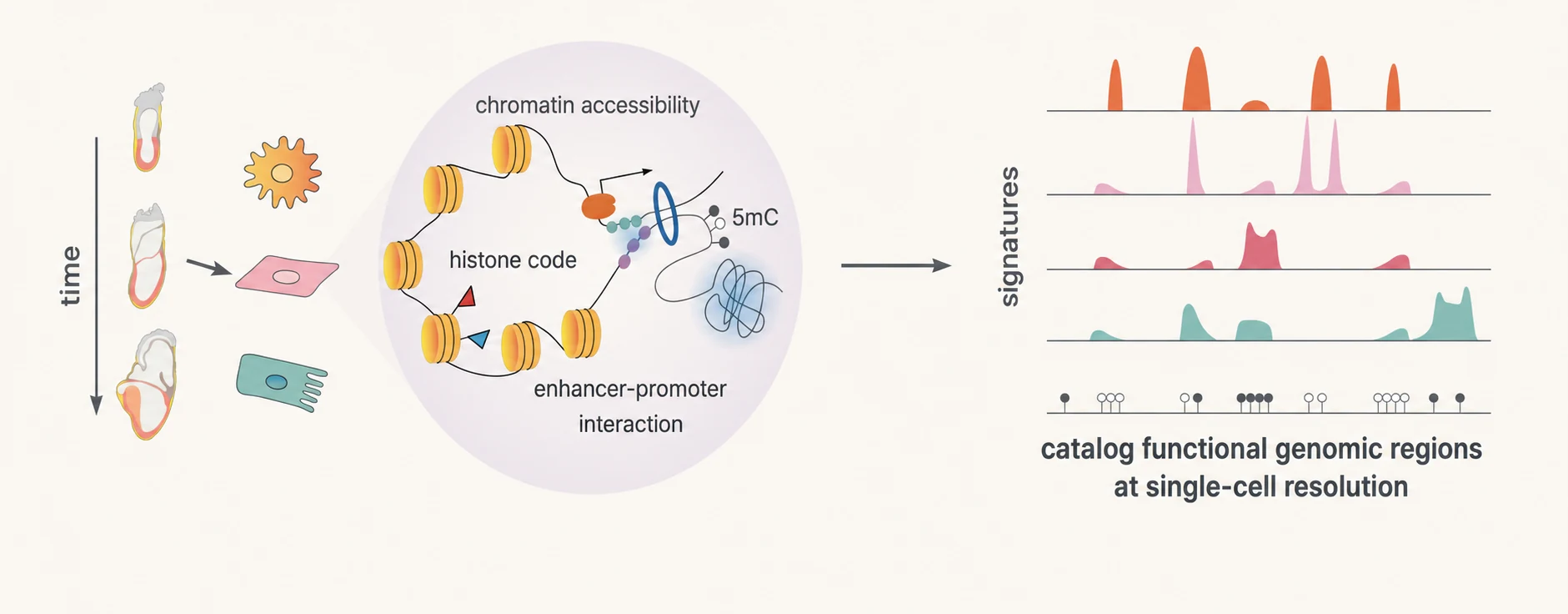
How do epigenetic states change during development?

How we study it
We profile chromatin accessibility, DNA methylation, histone states and enhancer–promoter interactions across developmental time at single-cell resolution.
What we aim to learn
Which epigenetic changes accompany the emergence of different cell identities.
Open full-size figure

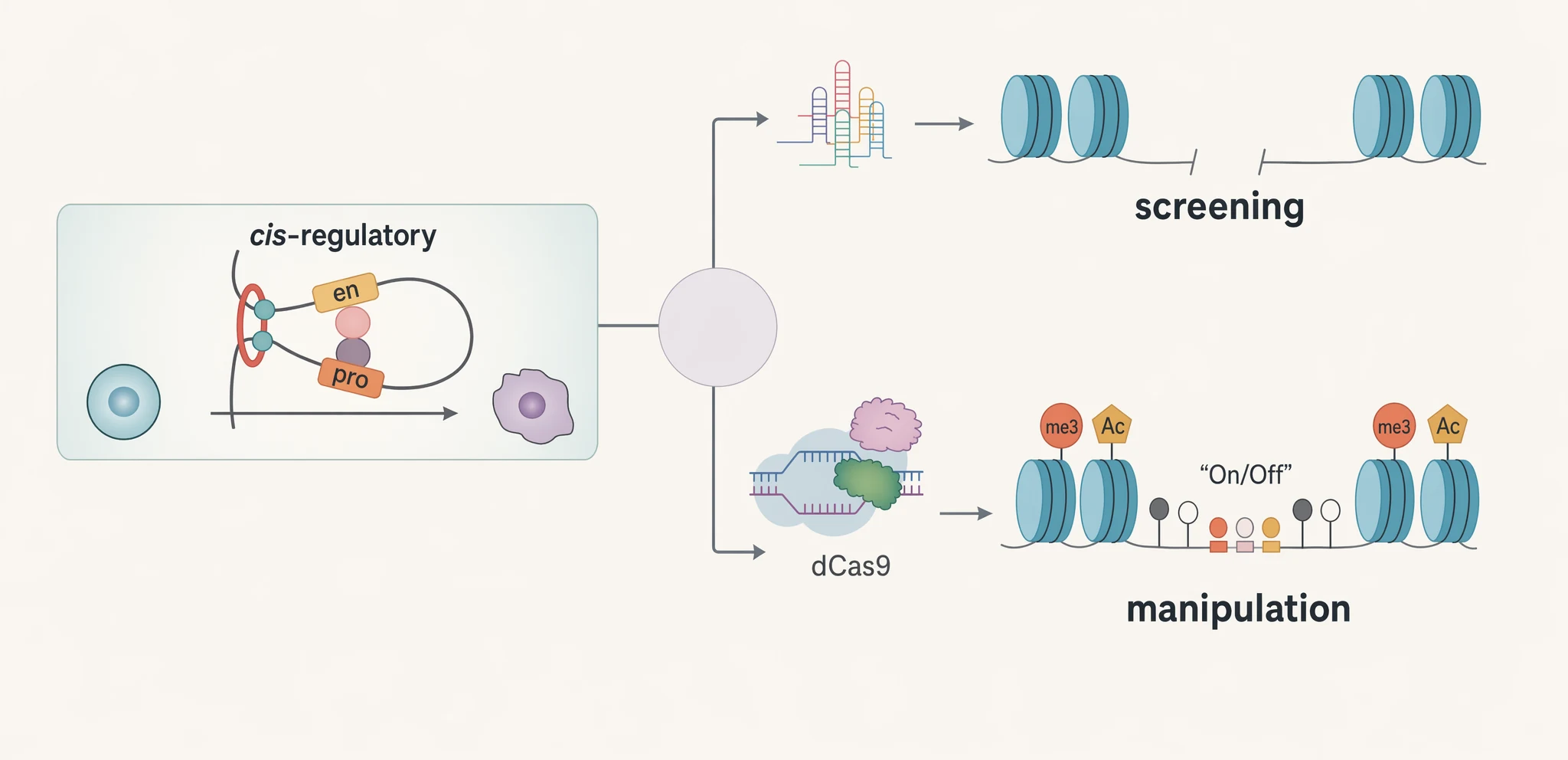
Which regulatory elements influence cell fate?

How we study it
We identify candidate enhancers and transcription factors, then test their functions through targeted perturbation and epigenome editing.
What we aim to learn
Which candidates contribute to cell-fate decisions, and how their activity affects gene regulation.
Open full-size figure

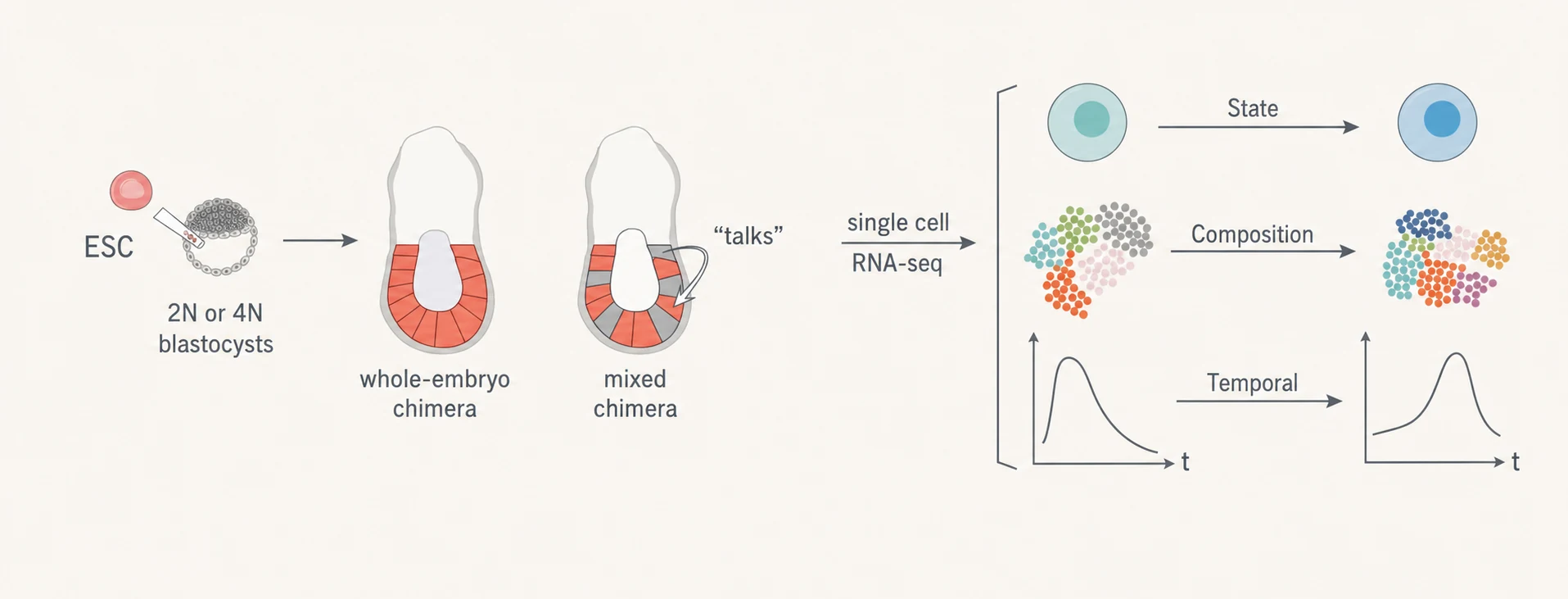
How do genes affect a cell and its neighbours?

How we study it
We compare whole-embryo and mixed chimeras using single-cell profiling, examining cell states, cell composition and developmental timing.
What we aim to learn
How gene perturbations affect the altered cells themselves and other cells in the developing embryo.
Open full-size figure

Principal Investigator

Saifeng Cheng

Assistant Professor

Principal Investigator, Westlake University

Postdoctoral Fellow, Weizmann Institute of Science

Ph.D., Huazhong Agricultural University


Current Members

Ying Zhu

PhD student (2024-)

Bachelor degree, Shenzhen University

Shuailin Du

PhD student (2024-)

Master degree, Xiamen University

Bachelor degree, Zhejiang Chinese Medical University

Jingyi He

PhD student (2025-)

Bachelor degree, Zhejiang Normal University

Jing Qian

PhD student (2025-)

Bachelor degree, Soochow University

Shuo Wang

PhD student (2025-)

Bachelor degree, Soochow University

Weiyuan Ma

Research Assistant (2025-)

Bachelor degree, South China Agricultural University


Alumni

Jinfang Wang

Postdoctoral Fellow

PhD degree, Xiamen University

Bachelor degree, Soochow University

Qi Geng

Visting student(2025)

PhD student at Westlake university (2026)

Jieran Don

Research Assistant

Master degree, Sichuan Agricultural University

Bachelor degree, Sichuan University of Traditional Chinese Medicine

Publications

* Co-first author # Corresponding author

2025

  • Akhiad Bercovich, Aviezer Lifshitz, Michal Eldar, Saifeng Cheng, Roni Stok Ranen, Yonatan Stelzer, Amos Tanay#. IceQream: Quantitative chromosome accessibility analysis using physical TF models. Nature Communications 16, 8984. 10.1038/s41467-025-63925-x.

2024

  • Ron Hadas*, Hernan Rubinstein*, Markus Mittnenzweig*, Yoav Mayshar, Raz Ben-Yair, Saifeng Cheng, Alejandro Aguilera-Castrejon, Netta Reines, Ayelet-Hashahar Orenbuch, Aviezer Lifshitz, Dong-Yuan Chen, Michael B Elowitz, Magdalena Zernicka-Goetz, Jacob H Hanna, Amos Tanay#, Yonatan Stelzer#. Temporal BMP4 effects on mouse embryonic and extraembryonic development. Nature 634, 652-661. 10.1038/s41586-024-07937-5.

2023

  • Yoav Mayshar*, Ofir Raz*, Saifeng Cheng, Raz Ben-Yair, Ron Hadas, Netta Reines, Markus Mittnenzweig, Oren Ben-Kiki, Aviezer Lifshitz, Amos Tanay#, Yonatan Stelzer#. Time-aligned hourglass gastrulation models in rabbit and mouse. Cell 186, 2610-2627.e18. 10.1016/j.cell.2023.04.037.
  • Marko Dunjić*, Felix Jonas*, Gilad Yaakov*, Roye More, Yoav Mayshar, Yoach Rais, Ayelet-Hashahar Orenbuch, Saifeng Cheng, Naama Barkai, Yonatan Stelzer. Histone exchange sensors reveal variant specific dynamics in mouse embryonic stem cells. Nat Commun 14, 1-19. 10.1038/s41467-023-39477-3.
  • Saifeng Cheng, Yoav Mayshar, Yonatan Stelzer. Induced epigenetic changes memorized across generations in mice. Cell 186, 683-685. 10.1016/j.cell.2023.01.023.

2022

  • Saifeng Cheng*, Markus Mittnenzweig*, Yoav Mayshar, Aviezer Lifshitz, Marko Dunjić, Yoach Rais, Raz Ben-Yair, Stephanie Gehrs, Elad Chomsky, Zohar Mukamel, Hernan Rubinstein, Katharina Schlereth, Netta Reines, Ayelet-Hashahar Orenbuch, Amos Tanay#, Yonatan Stelzer#. The intrinsic and extrinsic effects of TET proteins during gastrulation. Cell 185, 3169-3185.e20. 10.1016/j.cell.2022.06.049.

2021

  • Markus Mittnenzweig*, Yoav Mayshar*, Saifeng Cheng, Raz Ben-Yair, Ron Hadas, Yoach Rais, Elad Chomsky, Netta Reines, Anna Uzonyi, Lior Lumerman, Aviezer Lifshitz, Zohar Mukamel, Ayelet-Hashahar Orenbuch, Amos Tanay#, Yonatan Stelzer#. A single-embryo, single-cell time-resolved model for mouse gastrulation. Cell 184, 2825-2842.e22. 10.1016/j.cell.2021.04.004.
  • Alejandro Aguilera-Castrejon*, Bernardo Oldak*, Tom Shani, Nadir Ghanem, Chen Itzkovich, Sharon Slomovich, Shadi Tarazi, Jonathan Bayerl, Valeriya Chugaeva, Muneef Ayyash, Shahd Ashouokhi, Daoud Sheban, Nir Livnat, Lior Lasman, Sergey Viukov, Mirie Zerbib, Yoseph Addadi, Yoach Rais, Saifeng Cheng, Yonatan Stelzer, Hadas Keren-Shaul, Raanan Shlomo, Rada Massarwa, Noa Novershtern, Itay Maza#, Jacob H Hanna#. Ex utero mouse embryogenesis from pre-gastrulation to late organogenesis. Nature 593, 119-124. 10.1038/s41586-021-03416-3.

2018

  • Saifeng Cheng, Feng Tan, Yue Lu, Xiaoyun Liu, Tiantian Li, Wenjia Yuan, Yu Zhao, Dao-Xiu Zhou. WOX11 recruits a histone H3K27me3 demethylase to promote gene expression during shoot development in rice. Nucleic Acids Res 46, 2356-2369. 10.1093/nar/gky017.
View all publications on Google Scholar

Find your place in Cheng Lab

Postdoctoral researcher

Good fit if

  • You have a PhD and a strong background in developmental biology, epigenetics, single-cell multi-omics, computational biology or a related field.
  • Our model organism is the mouse; experience in mouse embryology or gene editing is especially welcome.

How to apply

Email your CV, a brief description of your research interests and contact information for three references.

Graduate student

Good fit if

  • You want to study how cell identities and gene regulation change during development in mouse embryo models, using experiments and single-cell multi-omics.
  • You are preparing to apply through the Westlake University graduate program and are interested in a lab rotation.

How to apply

Apply through the Westlake University graduate program and email us your CV and a short introduction to your research interests.

Research assistant

Good fit if

  • You are curious about developmental biology, epigenetics, single-cell multi-omics or computational biology.
  • Practical mouse laboratory or bioinformatics experience (e.g. single-cell multi-omics data analysis) is helpful, but motivation and ability to learn matter most.

How to apply

Email your CV, research interests, relevant experience and expected availability.

Visiting student

Good fit if

  • Your interests connect with developmental biology, epigenetics, single-cell multi-omics or computational analysis of mouse development.
  • You have a focused learning or research goal that can be developed with the lab.

How to apply

Email your CV, research interests and your proposed visit timing and duration.

Not sure where you fit?

Tell us about your background and interests.

Email the lab
3-228/229, Yunqi Campus, Westlake University, Hangzhou, China